
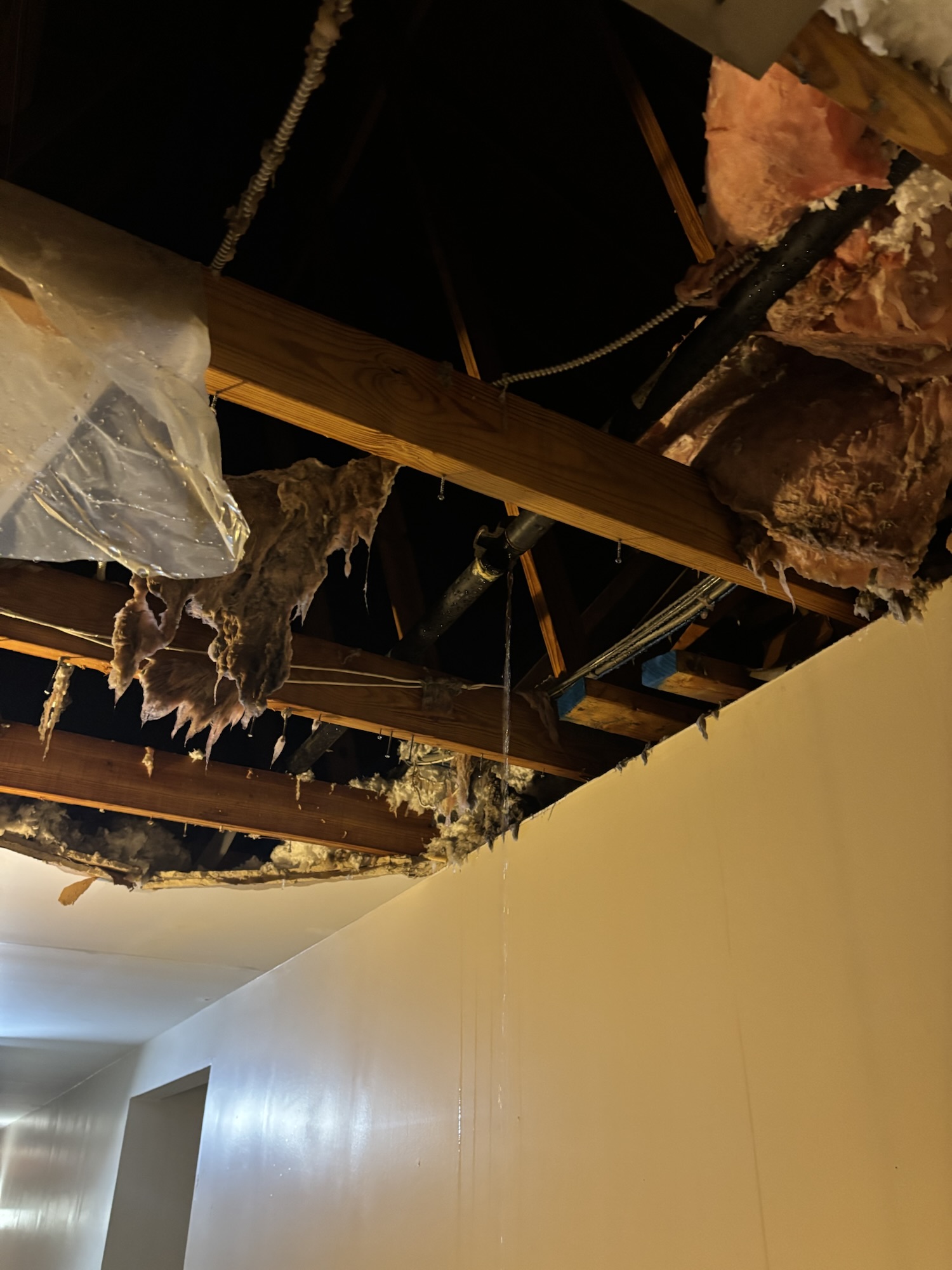
Hidden Water Damage Risks in Commercial Buildings: What Property Owners Miss Before Insurance Claims Begin
A tenant notices a faint odor in Unit 2204.
Not terrible.
Not strong enough for a call to the office for complaints.
Just a slight wet and musty smell.
Maintenance replaces a stained ceiling tile and moves on to the next work order.
Four months later another tenant complains about headaches.
Six months later drywall starts bowing near a corner office.
Nine months later an insurance claim begins.
Then comes the discovery no owner wants:
Water had been slowly traveling through wall cavities, insulation, floor assemblies, and structural components long before anyone realized a problem existed.
The pipe wasn’t the expensive part.
The delay was.
Water damage in commercial buildings rarely arrives dramatically. Most owners or lessee imagine burst pipes flooding hallways or even worse stormwater pouring through roofs.
Reality often looks much quieter.
Commercial losses frequently begin with something nearly invisible. A loose flashing detail. An aging pipe copper or galvanized fitting. HVAC condensation. Improperly flashed roof penetrations around equipment. Minor settlement movement. Small plumbing failures hidden behind walls.
For property purchasers, leasing companies, insurance agencies, and commercial investors, hidden moisture may be one of the most underestimated financial risks sitting inside a building.
For older Nashville commercial buildings especially warehouses, mixed-use properties, converted spaces, retail centers, and aging multifamily assets the risk becomes even more significant. Aging systems combined with humidity and weather patterns create opportunities for moisture migration that are easy to miss.
One of the largest misconceptions in commercial property ownership is believing that water damage stays near the visible leak.
It doesn’t.
Water behaves like an investigator.
It searches.
It follows gravity.
It follows openings.
It follows gaps around mechanical systems.
It follows framing assemblies.
It follows concrete capillary pathways.
It moves sideways and vertically in ways many people never expect. Multi-tenant properties are especially vulnerable because water can migrate across suites while visible signs remain isolated.
Imagine a small leak beginning above a dental office.
The moisture travels:
- Above insulation
- Along steel framing
- Behind drywall
- Under flooring systems
- Into neighboring tenant spaces
By the time visible staining appears, the leak may have already affected thousands of square feet.
The leak becomes a story hidden inside the structure.
Why Older Nashville Commercial Properties Carry Different Risks
Nashville has experienced major redevelopment and adaptive reuse growth.
Old warehouses become breweries.
Industrial spaces become creative offices.
Retail spaces become mixed-use developments.
Former apartment communities become renovated housing.
Character and history sell properties.
But older buildings bring hidden variables.
Common concerns include:
- Aging plumbing systems
- Older roofing assemblies
- Outdated waterproofing details
- Foundation movement
- Prior undocumented repairs
- Multiple renovations by different owners
- Unknown maintenance history
These systems may not fail dramatically.
Instead, they often fail gradually.
That gradual deterioration is dangerous because people adapt to it.
Maintenance staff become accustomed to “that spot that occasionally leaks.”
Tenants stop mentioning odors.
Owners postpone investigation.
The building slowly absorbs the consequences.
Insurance Companies Think About Water Differently Than Property Owners
Many owners focus on whether insurance will cover damage.
Insurance professionals often focus on reducing preventable loss.
Those are different perspectives.
Water damage doesn’t simply create repair expenses.
It creates:
Commercial insurers increasingly emphasize mitigation, preventive maintenance, and risk awareness because loss frequency and costs continue increasing.
For insurance agencies adding inspection resources into commercial portfolios, identifying potential risks before claims occur can provide additional value to clients.
The most expensive claim is often the one that never needed to happen.
The Hidden Damage Nobody Sees During Walkthroughs
During acquisitions, buyers frequently focus on obvious items:
- Roof age
- HVAC equipment
- parking lots
- appearance
- tenant improvements
Yet hidden moisture conditions often leave subtle clues.
Watch for:
Ceiling Tile Staining
Not every stain is active.
But every stain has a story.
Water stains deserve investigation rather than assumptions.
Repeated Paint Repairs
Fresh paint can hide recurring moisture symptoms.
Multiple paint layers sometimes conceal previous water events.
Musty Odors
Occupants often identify problems before equipment does.
Human smell sensitivity frequently notices hidden moisture before visual signs emerge.
Floor Irregularities
Minor lifting, soft spots, or uneven surfaces can indicate moisture migration.
Tenant Complaints
Repeated comfort complaints sometimes reveal larger system issues.
Insurance and risk professionals specifically note that occupant concerns may provide early warning indicators.
Warehouses: The Building Type People Underestimate
In Nashville, warehouses have become increasingly attractive investments.
But many older industrial buildings contain risk factors that buyers underestimate.
Warehouse vulnerabilities include:
Roof Penetration Issues
Commercial roofs frequently contain:
- HVAC penetrations
- exhaust systems
- vent stacks
- utility penetrations
- skylights
Every penetration becomes another opportunity for moisture intrusion.
Large Roof Surface Areas
Bigger roofs mean larger exposure zones.
Minor failures may go unnoticed across thousands of square feet.
Occupancy Changes
Buildings originally intended for storage may later house:
- offices
- food operations
- medical uses
- retail functions
Different occupancies create different moisture demands.
Dental Offices, Retail Spaces, and Small Commercial Suites Have Unique Risks
Smaller commercial properties create a dangerous assumption:
“It’s a smaller space, so risk is smaller.”
That assumption frequently fails.
Dental offices involve:
Retail properties involve:
Food operations introduce additional moisture and drainage considerations.
Small leaks become significant because businesses depend heavily on operational continuity.
Even temporary closure creates financial consequences.
What Commercial Due Diligence Should Really Ask
Traditional questions often sound like this:
“How old is the roof?”
“How old is the HVAC?”
“What major repairs have been completed?”
Better questions include:
“Have tenants reported recurring odors?”
“Have ceiling tiles been repeatedly replaced?”
“Have multiple leak repairs occurred in the same area?”
“Are there maintenance logs?”
“Has moisture mapping ever been performed?”
“What complaints repeatedly occur?”
These questions shift the conversation from visible conditions toward operational history.
Buildings leave clues.
People sometimes ignore them.
Delve Deeper: Why Inspection Should Be More Than a Checklist
Commercial inspections become more valuable when they move beyond simple component descriptions.
A building tells a story.
The goal is learning how systems interact.
Fifteen years around housing environments from affordable housing communities and senior properties to large multifamily operations show a pattern:
Residents often notice problems way before reports are generated.
Maintenance teams notice changes before ownership does.
Small issues don’t usually stay small.
The ability to Delve beneath surface observations often reveals the difference between maintenance expenses and major losses.
That is where inspection becomes less about checking boxes and more about understanding building behavior.
Three Internal Resources for Property Owners
For readers evaluating commercial properties, these resources can help continue the process:
Schedule an Inspection with Delve Inspections
The Future of Commercial Risk Assessment
Commercial property evaluation is changing.
Artificial intelligence, sensor technology, leak detection systems, and predictive maintenance continue growing.
Yet technology still depends on one thing:
Someone recognizing a problem exists.
No sensor replaces critical observation.
No report replaces experience.
No algorithm replaces understanding how people actually live and work inside buildings.
The future will not eliminate inspections.
The future will reward better inspections.
Final Thought: The Ceiling Tile Was Never the Problem
The stained tile wasn’t the problem.
The pipe wasn’t the problem.
The moisture wasn’t even the entire problem.
The real issue was time.
Time allowed water to move.
Time allowed systems to deteriorate.
Time allowed costs to grow.
Time allowed risk to compound.
Commercial property owners, purchasing groups, leasing companies, and insurance professionals are increasingly recognizing that hidden building conditions create measurable financial consequences long before claims begin.
The question is rarely:
“Is there damage?”
The question becomes:
“What is happening beneath the surface that nobody has discovered yet?”
If you’re purchasing, leasing, insuring, or managing a commercial property in Nashville or Middle Tennessee, a detailed inspection can help identify concerns before small issues become expensive stories.
Schedule your inspection with Delve Inspections and take a closer look before hidden conditions become visible problems.
Call Delve at 615-852-6246
Leave a Reply